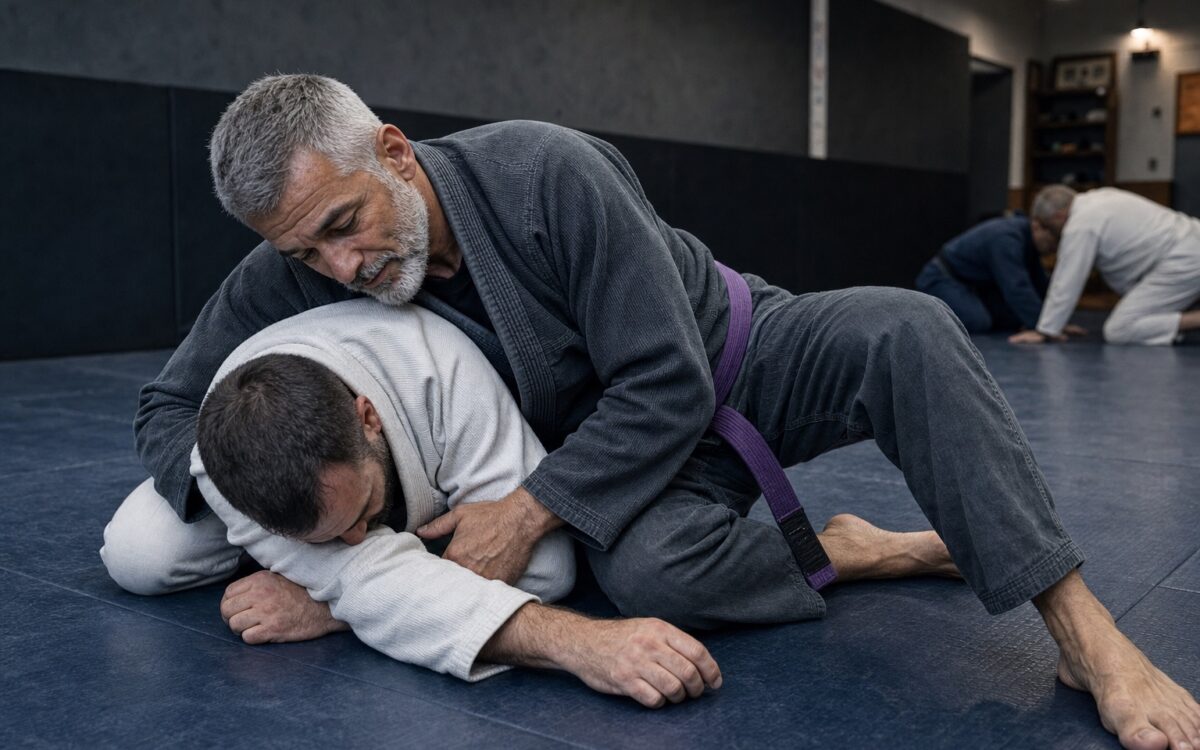
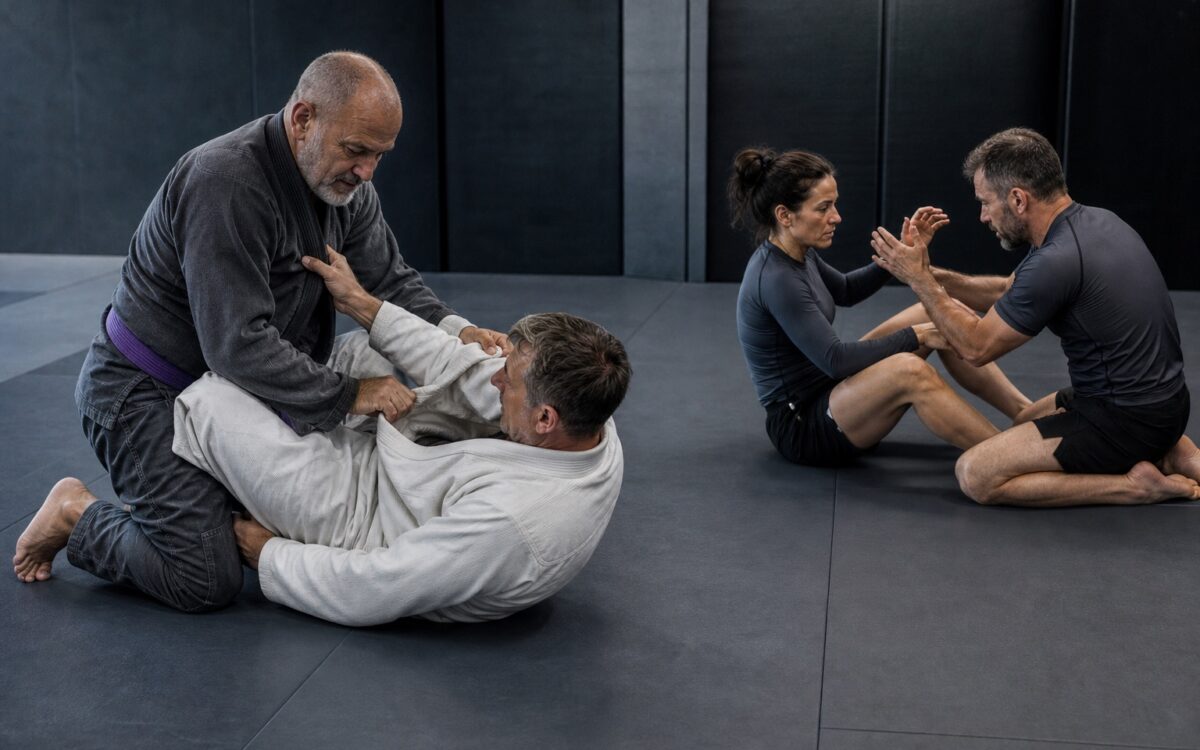
Starting BJJ at 40: A Realistic Guide to Your First Three Months
A realistic first-three-month guide for adults starting Brazilian jiu-jitsu after 40, from choosing a gym to training consistently and tapping early.
Start with the full guideYou are not too old. You are old enough to know that exploding from bad positions is a shitty retirement plan.
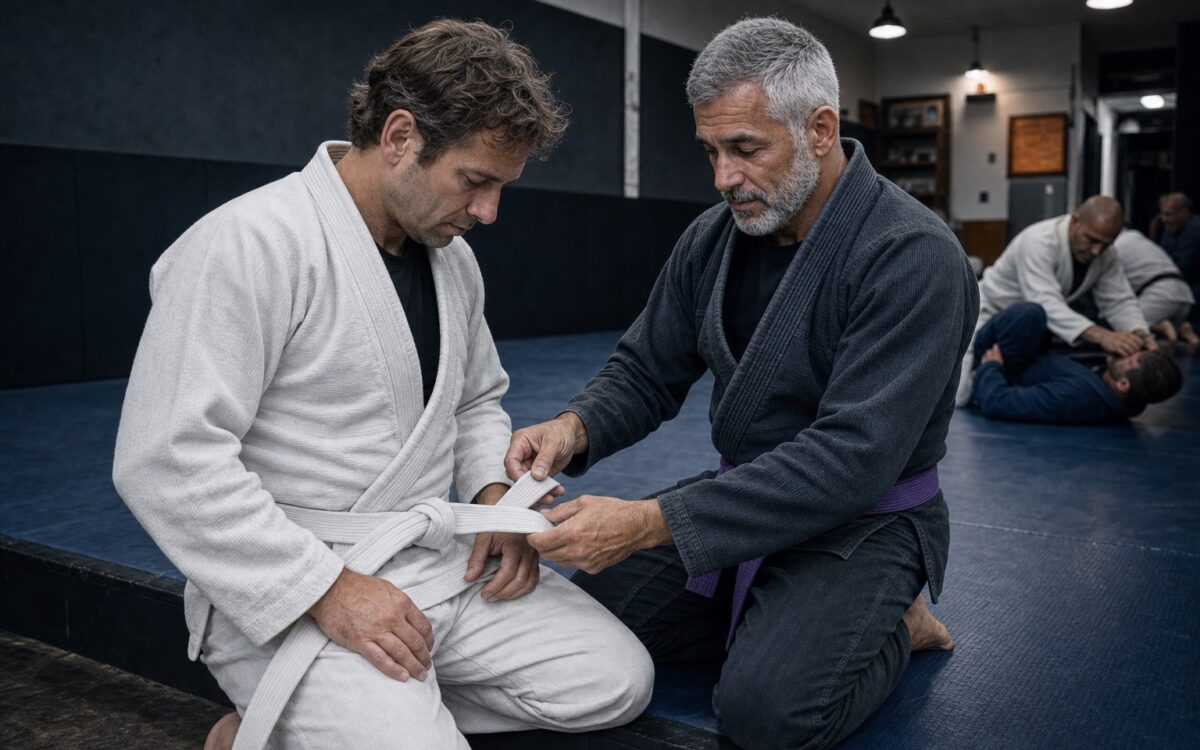
Start with the situation that sounds most like yours. There is no quiz and, mercifully, no personal brand exercise.
The goal is not to become dangerous by Labor Day. The goal is to still be training next year.
Tap early, recognize the major positions, and learn which training partners understand the word light.
Choose one escape from mount, one from side control, and one guard you can find without a committee meeting.
Link a position, a sweep or pass, and a finish. Three things that connect beat forty things you vaguely remember.
If the move only works after you grunt, it may not be a move.
Nobody has ever won open mat by meeting their insurance deductible.
Add volume when sleep, soreness, work, and enthusiasm are all behaving.
Frames, pressure, and timing are cheaper than trying to out-scramble a 24-year-old.
Three useful guides. No vision board required.
A realistic first-three-month guide for adults starting Brazilian jiu-jitsu after 40, from choosing a gym to training consistently and tapping early.
Start with the full guideYou do not need a new personality. You need a smaller game that works when you are tired.
Find your next technique